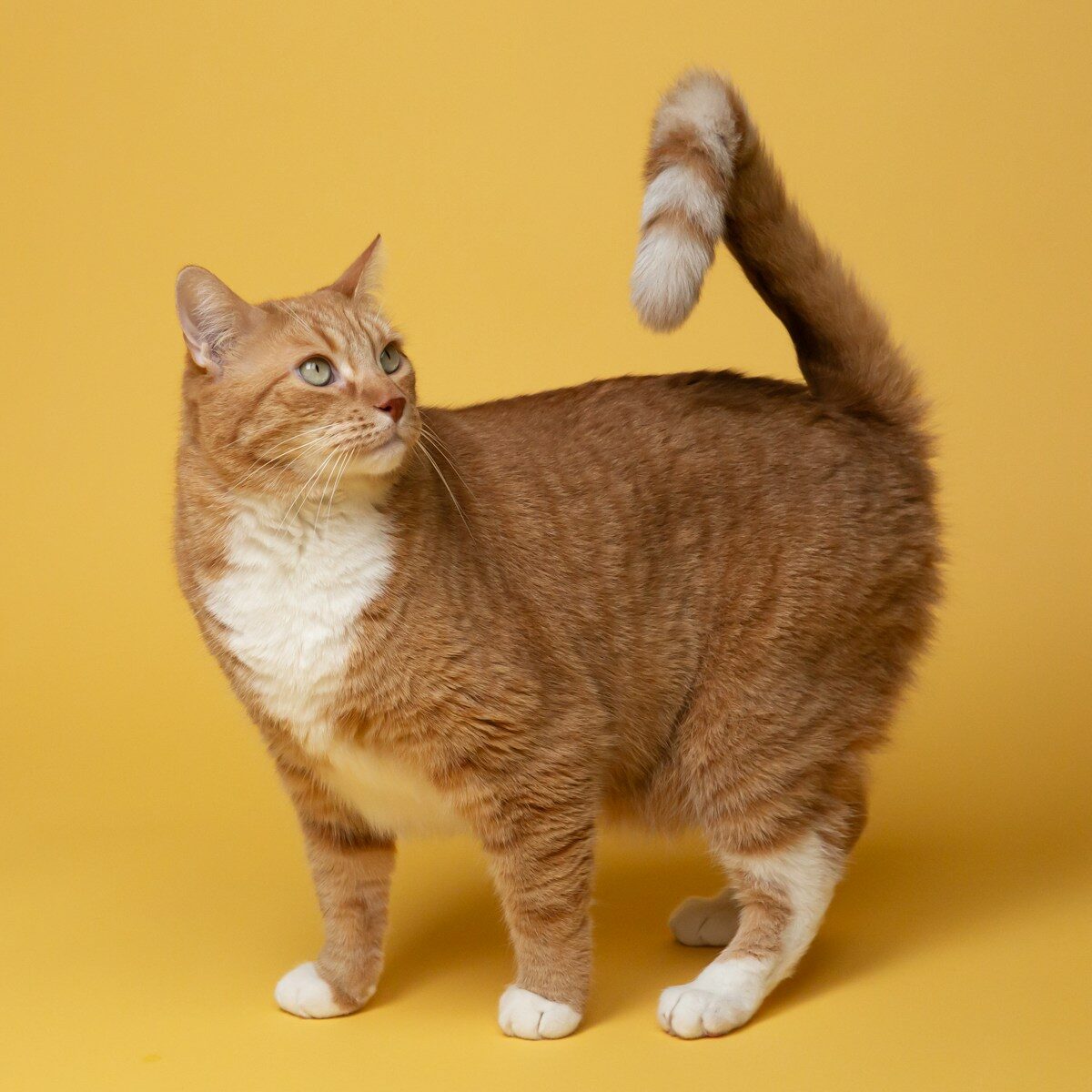
Never Ignore This Tail Movement in Your Cat — Here’s What
Key Takeaways
- Core Concept: Explore insights on Never Ignore This Tail Movement in Your Cat — Here's What.
- Summary: The tail movement you should never ignore: rapid, rhythmic lashing (thrashing) of the tail from side to side, especially when combined with flattened ears, dilated pupils, or a crouched posture. This movement signals one of three things: Acute agitation or…
- Application: Apply these inspirational principles to improve personal and professional growth.
The tail movement you should never ignore: rapid, rhythmic lashing (thrashing) of the tail from side to side, especially when combined with…
The tail movement you should never ignore: rapid, rhythmic lashing (thrashing) of the tail from side to side, especially when combined with flattened ears, dilated pupils, or a crouched posture.
This movement signals one of three things:
Most Viral Tool - free SEO audit tool Tool | AI resume tailor tool-tailor" target="_blank" rel="noopener">ATS Resume Generator| Seller Profit & Tax Spreadsheet |
- Acute agitation or overstimulation — your cat is about to bite or scratch. Stop whatever interaction triggered it.
- Pain — if the lashing occurs without an obvious external trigger (no petting, no prey, no other animal), it may indicate abdominal pain, urinary distress, or musculoskeletal discomfort.
- Feline Hyperesthesia Syndrome — if the lashing is accompanied by rippling skin along the back, frantic biting at the tail or flank, sudden vocalization, or dilated pupils with a “glazed” look, seek veterinary evaluation. This neurological condition requires professional diagnosis and treatment.
Rule of thumb: A single tail flick is a sentence. Sustained thrashing is a shout. If your cat is shouting with its tail and you can’t identify why, call your veterinarian.
Part 1: The Anatomy Behind the Signal
Why the Tail Is Your Cat’s Most Honest Communicator
Unlike vocalizations — which cats largely developed to communicate with humans, not with each other — tail movements are part of the feline species’ original communication system. Cats use tail signals with other cats, with humans, and even unconsciously when alone.
Key anatomical facts:
- 19–23 caudal vertebrae make up the tail, giving it extraordinary range of motion
- 6 muscles control gross movement (lateral, dorsal, ventral)
- Numerous smaller muscles between vertebrae enable fine-tuned positioning of the tail tip independently from the base
- Sacral and caudal nerves connect the tail to the spinal cord, which is why tail injuries can affect bladder and bowel control
- Involuntary muscles attached to hair follicles cause piloerection (the “bottle brush” puff) — this is a sympathetic nervous system response, meaning the cat cannot fake it
That last point matters: piloerection is involuntary. When a cat’s tail puffs up, that is a genuine physiological fear or arousal response. The cat is not choosing to look bigger. Its nervous system is doing it automatically. This makes the puffed tail one of the most reliable signals in feline body language.
Trending Today- Earn $$$ FREE | Trending LIFE Quotes | HOT DEBATES | Autograph | FREE PAID Tools | Advertise FREE |
Part 2: The 12 Tail Signals Every Cat Owner Must Recognize
The T.A.I.L. Reading Framework™
Before interpreting any tail signal, run through this four-point check:
| Letter | Check | Why It Matters |
|---|---|---|
| T | Trigger — What happened in the 5 seconds before this tail movement? | Context determines meaning. A tail flick during petting means “stop.” A tail flick while watching a bird means “prey drive.” |
| A | Accompaniments — What are the ears, eyes, whiskers, and body doing? | Tail signals are part of a multimodal system. A high tail with soft eyes = friendly. A high tail with stiff legs and staring eyes = confrontation. |
| I | Intensity — How fast, how wide, and how sustained is the movement? | Slow swish ≠ rapid lash. A gentle curve ≠ a rigid arch. Speed and tension change meaning dramatically. |
| L | Longevity — Is this a momentary signal or a sustained state? | A brief tail flick is a comment. Sustained thrashing is an emergency. A tail that stays tucked for hours suggests chronic stress or pain. |
Use this framework every time. It prevents the most common mistake in cat body language interpretation: reading the tail in isolation.
Signal 1: Tail Held Straight Up (The Flagpole)
What it looks like: Tail vertical, base to tip, often with a slight forward lean at the very top.
What it means: Confidence, friendliness, social openness. This is a greeting signal.
The science: The “tail-up” posture is one of the most studied signals in feline ethology. Research suggests it evolved during domestication as an affiliative (friendship-signaling) gesture. Wild cat species rarely display it during social encounters. In domestic cat colonies, lower-ranking cats often display tail-up toward higher-ranking individuals — it functions as both a greeting and a social acknowledgment.
Practical context: If your cat approaches you with tail up, it is saying “I recognize you, I’m comfortable, I’m open to interaction.” This is the green light.
The nuance competitors miss: Tail-up is not always an invitation to pet. It signals social openness, not necessarily a desire for physical contact. Pair it with head-butting or cheek-rubbing? Pet away. Pair it with a direct walk past you toward the food bowl? Your cat acknowledged you but has other priorities.
Signal 2: The Question-Mark Hook
What it looks like: Tail up with the tip curved forward, resembling a question mark or a shepherd’s crook.
What it means: Playfulness, curiosity, an invitation to interact.
Practical context: This is your cat’s version of “Want to play?” or “Something interesting is happening.” It’s one of the most positive signals in the tail vocabulary.
When to act: Grab the feather wand. This is peak engagement readiness.
Signal 3: The Quiver
What it looks like: Tail held upright with a fine, rapid vibration — almost like the tail is buzzing.
What it means: Intense positive excitement. Most commonly seen when greeting a favorite person after an absence.
Important distinction: The quiver is sometimes confused with urine-spraying posture. The difference: during spraying, the cat backs up to a vertical surface, the tail quivers, and urine is released. During a greeting quiver, the cat faces you, no urine is released, and the body language is otherwise relaxed and forward-approaching.
If your cat quivers its tail at you: You are one of its favorite beings on earth. Accept the compliment.
Signal 4: Slow, Fluid Swish
What it looks like: Tail moves in a slow, sweeping arc from side to side. Movement is smooth, not jerky.
What it means: Focused attention. The cat is processing something — watching prey, evaluating a new object, or deciding whether to jump.
Practical context: This is the tail of a cat in “assessment mode.” During play, it means your cat is locked on the toy. During observation (watching birds through a window), it means deep concentration.
The mistake owners make: Interpreting the slow swish as contentment during petting. A slow swish while being petted is often the first warning sign of overstimulation. The cat is not relaxed — it is processing increasing arousal. If you see this, watch for the next signal escalation (ears rotating back, skin twitching, body stiffening). If those appear, stop petting immediately.
Signal 5: Quick Tail Flick (Tip Only)
What it looks like: Just the last inch or two of the tail snaps sharply to one side. The rest of the tail stays still.
What it means: Mild irritation or conflicted attention.
Practical context: Think of this as a muttered “hmm” or “knock it off.” It’s low-level. The cat is not in distress. But it is registering something it doesn’t love — a sound it finds annoying, petting that has gone on slightly too long, or the presence of a cat it doesn’t particularly like on the other side of the room.
Action: Note it but don’t overreact. If you were petting, ease off. If nothing was happening, the cat may be responding to a stimulus you can’t perceive (cats hear frequencies up to ~64 kHz, roughly three times your range).
Signal 6: Rapid Side-to-Side Lashing (Thrashing)
What it looks like: The entire tail whips forcefully from side to side in wide, fast arcs. The movement involves the base of the tail, not just the tip.
What it means: High agitation. This is the signal you should never ignore.
Classification (FACT): This movement is a well-documented indicator of acute emotional arousal in domestic cats, recognized by veterinary behaviorists as a warning signal for impending aggression.
The three-cause framework:
| Cause | Accompanying Signs | What to Do |
|---|---|---|
| Overstimulation from petting | Ears rotating backward, skin rippling, body stiffening, pupils dilating | Stop petting. Remove your hands. Do not reach toward the cat. Wait for the tail to slow or stop. |
| Redirected aggression | Staring at window or another cat, body tense, may vocalize (growling or hissing) | Do not approach. Do not touch. Allow the cat to de-escalate on its own. Block visual access to the trigger if possible. |
| Pain or medical distress | Lashing without obvious external trigger, especially while lying down; may be combined with vocalizing, refusing food, or hiding | Contact your veterinarian. Record a video of the behavior if possible — this is extremely helpful for diagnosis. |
Critical point: Dogs wag their tails when happy. Cats do not. A wagging, lashing, or thrashing cat tail is never a sign of happiness. This is the single most important cross-species distinction in pet body language, and failing to recognize it is one of the most common causes of cat bites.
Signal 7: Tail Tucked Under the Body
What it looks like: Tail curled tightly beneath the body, pressed against the belly or between the hind legs.
What it means: Fear, submission, or pain.
When it’s behavioral: A cat in a new environment, at the veterinary clinic, or confronted by a dominant animal may tuck its tail as a submissive gesture. This is the feline equivalent of making oneself small.
When it’s medical: A cat that consistently keeps its tail tucked at home — in a familiar, previously comfortable environment — may be in pain. Abdominal pain, urinary tract issues, and anal gland problems can all produce this posture.
Breed exception: Some breeds, notably Persians and certain Scottish Folds, naturally carry their tails lower than average. This is a structural trait, not a behavioral signal. Baseline matters — know your cat’s normal carriage.
The Longevity Check: Tail tucked for a few minutes in a stressful situation? Normal coping. Tail tucked for hours or days? Veterinary evaluation recommended.
Signal 8: The Bottle Brush (Piloerection)
What it looks like: All the fur along the tail stands on end, making the tail appear two to three times its normal diameter. Often accompanied by an arched back.
What it means: Intense fear or defensive arousal.
The science (FACT): Piloerection is controlled by the sympathetic nervous system — the same “fight or flight” system that increases heart rate and dilates pupils. It is an involuntary response. The cat cannot consciously control it. Its biological purpose is to make the animal appear larger to a potential threat.
Practical context: Do not approach a bottle-brush cat. Do not attempt to comfort it with touch. Remove the threat if you can (close a door, remove the unfamiliar animal, turn off the vacuum). Give the cat an escape route — a high perch, an open door to another room, a hiding spot. Forced confinement with a bottle-brush cat dramatically increases the risk of defensive aggression.
Duration concern: Occasional piloerection in response to genuine startling events (a sudden loud noise, an unexpected visitor) is normal. Frequent piloerection in a stable home environment suggests chronic anxiety and warrants evaluation — not necessarily by a veterinarian initially, but at minimum a review of environmental stressors (inter-cat conflict, insufficient vertical space, inadequate hiding spots, construction noise, etc.).
Signal 9: Tail Wrapped Around the Body (Self-Wrap)
What it looks like: Cat is sitting or lying down with its tail curled around its body, often covering the paws.
What it means: Context-dependent.
| Body Language Context | Likely Meaning |
|---|---|
| Eyes soft or slowly blinking, body relaxed, ears neutral | Contentment. The cat is comfortable and resting. May also serve thermoregulation (the tail acts as a heat-conserving wrap). |
| Eyes wide, body tense, ears flattened or rotated backward | Defensive withdrawal. The cat is uncomfortable and creating a physical barrier. |
| Consistent self-wrapping in a cat that previously did not do this | Possible chronic stress, pain, or illness — particularly if combined with reduced appetite, hiding, or decreased social interaction. |
The nuance: Self-wrapping is often listed as a single signal with a single meaning. It’s not. A cat curled comfortably on a sunlit windowsill with its tail around its paws is in a fundamentally different state than a cat pressed into a corner with its tail wrapped tightly around its body. Context is everything.
Signal 10: Tail Wrapped Around You or Another Animal
What it looks like: Cat drapes or curls its tail around your arm, leg, or another pet it is sitting near.
What it means: Affiliation and bonding. This is the feline equivalent of putting an arm around someone.
Practical context: If your cat wraps its tail around you, it is signaling trust and social connection. This is not a common behavior in cats with low human-attachment styles. If your cat does this, your bond is strong.
Signal 11: Tail Held Low and Straight Back
What it looks like: Tail extends behind the cat at roughly a 45-degree angle below horizontal, carried stiffly.
What it means: Uncertainty, mild anxiety, or cautious assessment.
Practical context: You often see this when a cat enters a new room, encounters a mildly unfamiliar object, or is deciding whether to approach or retreat. It’s the “I’m not sure about this” tail.
Action: Give the cat space and time. Don’t force interaction. Let it approach on its own terms.
Signal 12: Limp, Drooping, or Immobile Tail
What it looks like: The tail hangs limply, drags on the ground, or the cat cannot raise, move, or curl it.
What it means: Medical emergency.
Classification (FACT): A limp tail in a cat that previously had normal tail mobility is a clinical sign of nerve damage, spinal injury, or tail fracture. The most common cause is a “tail pull” injury — traction on the tail that damages the sacral and caudal nerves of the cauda equina. These same nerves control bladder and bowel function.
What to do immediately:
- Do not manipulate the tail. Moving a damaged tail can worsen nerve injury.
- Check for bladder function. Is the cat urinating? Is there urine dribbling? Loss of bladder control alongside a limp tail is a neurological emergency.
- Contact your veterinarian the same day. Early assessment dramatically improves outcomes. Bring any observations about urination, defecation, and hind-leg coordination.
- Record a video. Capture the cat walking, showing the tail position, and any attempts to move it. This helps the veterinarian assess severity remotely before your arrival.
Prognosis (INFERENCE based on published veterinary data): Studies suggest approximately 90% of cats with sacrocaudal nerve damage from tail-pull injuries eventually regain voluntary urinary function, but recovery can take weeks to months. The neurological grade at first presentation — how severe the initial symptoms are — is the strongest predictor of outcomes.
Part 3: The Tail-Signal Severity Matrix™
Use this matrix to assess how urgently you need to respond to a tail signal.
| Tail Signal | Severity Level | Immediate Action Required? | Veterinary Consult? |
|---|---|---|---|
| Tail up (flagpole) | 🟢 Normal | No | No |
| Question-mark hook | 🟢 Normal | No — engage in play | No |
| Quiver | 🟢 Normal | No — reciprocate greeting | No |
| Slow swish (during observation) | 🟢 Normal | No | No |
| Slow swish (during petting) | 🟡 Caution | Yes — reduce stimulation | No |
| Quick tail-tip flick | 🟡 Caution | Yes — note and adjust | No |
| Rapid lashing (with known trigger) | 🟠 Warning | Yes — stop interaction, give space | No, unless recurring |
| Rapid lashing (no obvious trigger) | 🔴 Urgent | Yes — observe closely | Yes — same week |
| Tail tucked (temporary, in stressful context) | 🟡 Caution | Remove stressor if possible | No |
| Tail tucked (sustained, at home) | 🟠 Warning | Monitor for additional signs | Yes — within days |
| Bottle brush (single event) | 🟡 Caution | Remove threat, give escape route | No |
| Bottle brush (frequent) | 🟠 Warning | Environmental audit | Yes — behavioral consult |
| Limp or immobile tail | 🔴 Emergency | Do not manipulate; assess bladder | Yes — same day |
| Tail chasing/biting with skin rippling | 🔴 Emergency | Record video | Yes — same day |
Part 4: The Three Medical Conditions That Change Tail Behavior
Condition 1: Feline Hyperesthesia Syndrome (FHS)
What it is: A neurological/behavioral condition characterized by extreme skin sensitivity, particularly along the back and at the tail base.
Tail-related signs:
- Frantic tail chasing or biting
- Rippling or twitching skin (“rolling skin”) along the back
- Sudden, explosive running or vocalization
- Pupils dilating rapidly during episodes
- Aggression when the lower back or tail base is touched
Key fact (FACT): FHS is a diagnosis of exclusion. There is no single test. Veterinarians must rule out dermatological issues (fleas, allergies, fungal infections), neurological conditions (seizures, disc disease), and pain conditions (arthritis, tail injury) before reaching this diagnosis.
Treatment approaches: Gabapentin for neuropathic pain, anti-seizure medications if an epileptic component is suspected, anti-anxiety medications if a compulsive behavioral component is identified, and environmental modification to reduce triggers.
What competitors get wrong: Most articles mention FHS in a single sentence. It deserves depth because it is frequently misdiagnosed, causes significant suffering, and many owners have never heard of it. If your cat is biting its own tail bloody, this is not “quirky behavior.” It is a medical condition.
Condition 2: Tail-Pull Injury (Cauda Equina Trauma)
What it is: Nerve damage caused by forceful traction on the tail — a door closing on it, getting caught in furniture, being pulled by a child, or impact from a fall or vehicle.
Tail-related signs:
- Limp, dragging tail
- Loss of tail sensation (cat does not respond when tail is gently touched)
- Urinary or fecal incontinence
- Hind-leg weakness or unsteady gait
Why it matters beyond the tail: The cauda equina nerves that control the tail also control the bladder and anal sphincter. A “simple” tail injury can cause life-threatening urinary retention if the cat cannot empty its bladder.
Critical management point (FACT): The most important early intervention is bladder management — preventing over-distension through manual expression or catheterization while awaiting nerve recovery. This takes priority over decisions about tail amputation, which can often wait.
Condition 3: Arthritis and Chronic Pain
What it is: Degenerative joint disease affecting the spine, hips, or tail vertebrae — extremely common in cats over 10 years old.
Tail-related signs:
- Tail carried lower than the cat’s historical baseline
- Reduced tail mobility (less expressive movement)
- Flinching or aggression when the tail base or lower back is touched
- Gradual change, not sudden
Why this is missed: Cats are masters of masking pain. A gradual reduction in tail expressiveness is often attributed to “getting older” or “being less playful.” In many cases, it reflects chronic discomfort that is treatable.
Key distinction: Arthritis produces gradual changes in tail behavior. Sudden changes — a tail that was mobile yesterday and limp today — suggest acute injury, not arthritis.
Part 5: The Petting Overstimulation Escalation Ladder™
One of the most practical applications of tail-language fluency is avoiding petting-induced aggression — the phenomenon where a cat that was purring contentedly 10 seconds ago suddenly bites you.
This is not unprovoked aggression. It is overstimulation with a predictable escalation pattern. The tail telegraphs every stage.
Stage 1: Green Light (Safe to Pet)
- Tail: Still, gently curved, or slowly waving with loose, fluid motion
- Ears: Forward or neutral
- Eyes: Soft, may be slowly blinking
- Body: Relaxed, may be leaning into your hand
- Action: Continue at current pace and pressure
Stage 2: Yellow Light (Reduce Stimulation)
- Tail: Begins slow swishing — broader arcs than Stage 1, tempo increasing
- Ears: May rotate slightly sideways
- Eyes: Open wider, blinking slows
- Body: May shift weight subtly
- Action: Slow your petting. Reduce pressure. Move to less sensitive areas (cheeks, chin — avoid belly and tail base).
Stage 3: Orange Light (Stop Petting Now)
- Tail: Quick flicks at the tip, increasing in frequency. Tail may stiffen.
- Ears: Rotating backward
- Eyes: Pupils dilating
- Body: Skin may twitch or ripple along the back
- Action: Remove your hands. Do not pull away sharply (rapid movement can trigger a prey response). Slowly withdraw. Offer your hand at a distance; let the cat decide if it wants more contact.
Stage 4: Red Light (Disengage Immediately)
- Tail: Full lashing — wide, fast arcs involving the whole tail
- Ears: Flat against the head
- Eyes: Fully dilated pupils, staring
- Body: Tense. Coiled. May grab your hand with front paws.
- Action: Freeze. If your hand is trapped, go limp (pulling away triggers predatory grip). Wait for a release. Stand up slowly. Walk away. Do not punish.
The critical insight: Most owners don’t recognize Stages 2 and 3 because they’re watching the cat’s face. The tail tells you before the face does. Train yourself to watch the tail, and you will never be “randomly” bitten again.
Part 6: Breed-Specific Tail Communication Differences
Not all cats speak the same tail dialect. Breed anatomy and temperament create meaningful variations.
| Breed / Type | Tail Characteristic | How It Affects Reading |
|---|---|---|
| Manx / Cymric | Tailless or stub tail | Lose most tail signals. Must rely entirely on ears, eyes, body posture, and vocalizations. These breeds often compensate with louder and more frequent vocalizations. |
| Japanese Bobtail | Short, curved “pom-pom” tail | Limited range of motion reduces signal clarity. Focus on body-wide signals. |
| Persian / Himalayan | Naturally low tail carriage | A low tail is NOT necessarily a fear signal in these breeds. Establish a baseline and watch for changes from that baseline. |
| Siamese / Oriental | Long, thin, highly expressive tail | Exceptionally communicative. Tail signals may appear more dramatic than in stockier breeds — this is normal breed expression, not necessarily heightened emotion. |
| Maine Coon | Long, bushy tail | Piloerection is harder to read because the tail is already voluminous. Watch for changes in tail shape (stiff vs. relaxed) rather than fur volume alone. |
| Bengal | Thick, muscular tail with strong base | Tail lashing during play may appear more aggressive than in other breeds due to muscle mass. Bengals are high-energy; distinguish play-lashing from agitation by checking ear position. |
Baseline rule: Before you can read your cat’s tail language, you need to know what “normal” looks like for your specific cat. Spend a week observing your cat’s tail in different contexts — waking up, eating, playing, resting, greeting you. That’s your dictionary. Everything after that is about detecting deviations.
Part 7: Cat Tail vs. Dog Tail — The Cross-Species Confusion Matrix
This is the single most dangerous misunderstanding in multi-pet households and among people who grew up with dogs but now own cats.
| Signal | Dog Meaning | Cat Meaning | Risk of Confusion |
|---|---|---|---|
| Tail wagging side to side | Happy, excited, social | Agitated, overstimulated, warning | Critical |
| Tail held high | Alert, confident, dominant | Friendly, approachable, greeting | Low |
| Tail tucked | Fear, submission | Fear, submission, pain | Low |
| Tail stiff and still | Arousal, alertness | Focus, assessment, potential aggression | Moderate |
| Tail wagging at high speed | Extreme excitement/joy | Extreme agitation/imminent attack | Critical |
The data gap (ASSUMPTION): While no published study has quantified how many cat bites result from dog-to-cat signal misinterpretation, veterinary behaviorists and emergency room practitioners have noted this as a recurring pattern in bite consultations. People who interpret a lashing cat tail the way they would interpret a wagging dog tail are at significantly elevated risk.
Part 8: The Tail-Language Journal — A 7-Day Behavior Baseline Template
Understanding your cat’s unique tail vocabulary requires observation. Use this template for one week to establish your cat’s personal baseline.
Daily Entry Format
Date: _______________ Cat’s Name: _______________
| Time | Context (What was happening?) | Tail Position/Movement | Other Body Language | Your Interpretation | What Happened Next? |
|---|---|---|---|---|---|
End-of-Week Analysis Questions
- What is your cat’s “resting” tail position? (This is their baseline.)
- What tail signal does your cat show most often when relaxed?
- What tail signal appears immediately before your cat initiates play?
- What tail signal appears immediately before your cat bites or scratches?
- Are there times of day when tail signals are more active or intense?
- Did you notice any tail signals you couldn’t interpret? (Record these for future learning.)
- Did your cat’s tail behavior change noticeably in any environment or context?
Why this matters: Generic tail-language guides give you the species-wide dictionary. The journal gives you your specific cat’s dialect. After one week, you will understand your cat better than most owners ever will.
Part 9: When to Call the Veterinarian — The Tail Emergency Decision Tree
Follow this decision tree when you notice a tail behavior that concerns you.
Step 1: Is the tail physically injured? (Visible wound, swelling, abnormal angle, bleeding, dragging on the ground)
- YES → Seek same-day veterinary care. Do not manipulate the tail. Check for urinary function.
- NO → Go to Step 2.
Step 2: Is this a new behavior? (Something you have not seen before, or a significant change from baseline)
- YES → Go to Step 3.
- NO → Go to Step 5.
Step 3: Does the behavior involve any of the following?
- Tail chasing or biting with skin rippling
- Sustained tucking for hours with no obvious stressor
- Tail lashing without any identifiable trigger
- Inability to move the tail
- Incontinence (urine or fecal leaking)
- Vocalization when the tail or lower back is touched
- YES to any → Contact your veterinarian within 24 hours. Record video of the behavior.
- NO → Go to Step 4.
Step 4: Has the behavior persisted for more than 48 hours?
- YES → Schedule a veterinary appointment this week. Monitor for additional signs (appetite changes, hiding, litter box issues).
- NO → Monitor. Log the behavior in your tail-language journal. Note date, time, context, and any other changes. If it recurs, move to Step 3.
Step 5: Is the behavior causing problems? (Cat biting during petting, aggression toward other household pets, tail-related destruction)
- YES → Consider a behavioral consultation. Many issues are environmental, not medical. A certified feline behaviorist or Fear Free veterinarian can help.
- NO → Normal feline communication. Continue observing and building your fluency.
Part 10: Advanced Insights
The “Tail Tells” During Multi-Cat Interactions
In multi-cat households, tail language becomes a complex negotiation tool.
- Tail-up exchange: When two cats approach each other and both display tail-up, this is a mutual greeting — an affiliative interaction. It indicates the cats consider each other part of the same social group.
- One tail up, one tail down: Social asymmetry. The tail-down cat is deferring. This is not necessarily a problem — stable hierarchies often have predictable asymmetry. It becomes a concern only if the tail-down cat also shows sustained hiding, reduced eating, or litter box avoidance.
- Tail lashing in proximity to another cat: Pre-conflict. Separate the cats if possible. Redirected aggression — where a cat that is agitated by one stimulus attacks a different target — is one of the most common causes of inter-cat aggression in multi-cat households.
The Sleeping Tail Response
A sleeping cat that flicks its tail in response to hearing its name or a familiar voice — without waking or opening its eyes — is acknowledging you. This is the feline equivalent of a mumbled “I hear you” without committing to full consciousness. It is a sign of comfort and trust; the cat feels safe enough to remain asleep in your presence.
The “Elevator Butt” Tail Response
When you scratch a cat at the base of its tail and it raises its hindquarters while pressing its tail to one side, this is a reflexive response tied to a concentration of nerve endings at the tail base. It is not a voluntary “request” — it is closer to a reflex triggered by stimulation of a sensitive area. Some cats enjoy this; others find it overstimulating. Watch the accompanying signals (purring and kneading = positive; twitching and dilated pupils = overstimulating).
Part 11: Common Mistakes and Misconceptions
| Mistake | Reality |
|---|---|
| “My cat wags its tail when it’s happy, just like a dog.” | Tail wagging in cats signals agitation, not happiness. This misinterpretation is a leading cause of cat bites. |
| “My cat’s tail twitching while I pet it means it’s enjoying the petting.” | Tail twitching during petting is a warning sign of overstimulation. It means “I’m approaching my limit.” |
| “My cat’s puffed tail means it’s being aggressive.” | Piloerection is a defensive response driven by fear, not offensive aggression. The cat is trying to appear larger because it feels threatened. |
| “My cat keeps its tail low, so it must be unhappy.” | Some breeds naturally carry their tails lower. Always compare to your specific cat’s baseline before interpreting. |
| “A cat that wags its tail slowly is relaxed.” | A slow swish during petting is often the first stage of an overstimulation escalation. It signals processing, not relaxation. |
| “Tail signals are the only body language I need to read.” | The tail is one channel in a multimodal system. Always cross-reference with ears, eyes, whiskers, vocalizations, and body posture. |
| “If my cat’s tail is limp, it will fix itself.” | A limp tail is a potential neurological emergency. Same-day veterinary evaluation is warranted, particularly to assess bladder function. |
Part 12: Expert-Level Considerations
For Veterinary Professionals and Shelter Workers
- Stress assessment in clinical settings: Tail position is a first-line indicator during veterinary examinations. A cat that enters the exam room with tail up is in a fundamentally different stress state than one with tail tucked. Adjust handling protocols accordingly.
- Video-based assessment: Encourage clients to record tail behavior at home. In-clinic tail behavior is almost always modified by the stress of the clinical environment and does not represent baseline.
- Feline Grimace Scale integration: Tail position should be assessed alongside the validated Feline Grimace Scale for pain assessment. While the Grimace Scale focuses on facial features, tail posture provides complementary data, especially for abdominal and spinal pain.
- Shelter intake assessment: Tail behavior during the first 48 hours in a shelter environment is an unreliable indicator of a cat’s baseline temperament. Shelter stress profoundly affects tail carriage. Reassess after the cat has been in a consistent environment for at least 3–5 days.
For Behaviorists
- Tail-signal frequency analysis: Counting the frequency of tail flicks per minute during a behavior consultation can provide an objective measure of arousal that complements subjective assessments. A “flick rate” above ~10/minute in a resting context suggests significant agitation.
- Environmental enrichment correlation: Cats in enriched environments (vertical space, hiding spots, puzzle feeders, appropriate social grouping) display a higher ratio of tail-up to tail-tucked signals. This makes tail-up frequency a potential proxy measure for environmental welfare.
FAQs
Q: Why does my cat wag its tail when I talk to it? A: A small, gentle wag — usually just the tail tip — while your cat is otherwise relaxed is an acknowledgment. It means “I hear you and I’m choosing not to respond further right now.” It is not agitation. Think of it as the cat equivalent of a nod.
Q: My cat’s tail vibrates when it sees me come home. Is it about to spray? A: Probably not. The greeting quiver (tail up, fine vibration, no urine, cat approaching you) is a sign of intense positive excitement. Spraying involves backing up to a vertical surface with tail quivering and urine release. If no urine appears, it’s a greeting.
Q: Should I be worried if my cat chases its own tail? A: Occasional tail chasing in kittens is normal play behavior. In adult cats, frequent or intense tail chasing — especially combined with skin rippling, biting, vocalization, or self-injury — warrants veterinary evaluation for Feline Hyperesthesia Syndrome or other conditions.
Q: My cat wraps its tail around my arm. What does that mean? A: Affiliation and trust. This is a bonding gesture. Your cat is signaling that it considers you part of its social group.
Q: Why does my cat puff up its tail at a cucumber? A: The viral “cats scared of cucumbers” phenomenon triggers a startle response. The cat perceives a sudden, unexpected object in a location it considered safe (usually near its food). The piloerection is a genuine fear response. Deliberately triggering this is stressful for the cat and is not recommended.
Q: Can a cat with a bobbed or amputated tail still communicate? A: Yes, but they lose a major communication channel. These cats compensate through increased use of vocalizations, ear positions, eye contact, and body posture. Owners of these cats need to become especially skilled at reading non-tail signals.
Q: My old cat’s tail used to be very expressive, but now it barely moves. Is that just aging? A: Possibly, but it may also indicate arthritis, chronic pain, or neurological decline. A veterinary assessment — particularly a pain evaluation — is recommended. Many cats over 10 have some degree of degenerative joint disease that is treatable.
Q: Is there a difference between left-side and right-side tail wagging in cats? A: Research in dogs has shown lateralization (right-bias tail wagging associated with positive emotions, left-bias with negative), and some preliminary observations suggest similar patterns may exist in cats, but the data is insufficient to make definitive claims. This remains an open area of feline behavioral research.
Action Plan: Becoming Fluent in Your Cat’s Tail Language
Week 1: Observe
- Complete the 7-Day Tail-Language Journal (Part 8)
- Establish your cat’s personal baseline
- Identify your cat’s most common tail signals
Week 2: Test Your Reading
- Before each interaction with your cat, note the tail position
- Predict what your cat will do next based on the tail signal
- Track your accuracy
Week 3: Adjust Your Behavior
- Use the Petting Overstimulation Escalation Ladder to modify your petting sessions
- Practice stopping at Stage 2 (Yellow Light) instead of waiting for Stage 4 (Red Light)
- Notice how your cat’s trust and comfort increase when you respond to early signals
Week 4: Share and Expand
- Teach other household members the T.A.I.L. Reading Framework
- Brief pet sitters, visitors, and children on the critical distinction between cat tail lashing and dog tail wagging
- Begin observing ears, eyes, and vocalizations to build full-body fluency
Thank you for reading this post, don't forget to subscribe!
📌 Key Takeaways
- Part 1: The Anatomy Behind the Signal
- Part 2: The 12 Tail Signals Every Cat Owner Must Recognize
- Part 3: The Tail-Signal Severity Matrix™
- Part 4: The Three Medical Conditions That Change Tail Behavior
- Part 5: The Petting Overstimulation Escalation Ladder™
- Part 6: Breed-Specific Tail Communication Differences
- Part 7: Cat Tail vs. Dog Tail — The Cross-Species Confusion Matrix
References & Further Reading
Related Articles



Written by John @ Share-Ask
John is a digital strategist and side-hustle expert with over 5 years of experience in growing online platforms. He specializes in web optimization, productivity workflows, and turning creative habits into profitable online businesses.
Share-Ask Content Expert | Verified Contributor

![Pet Insurance Explained: Is It Worth It? The Complete Guide [Updated 2026]](https://share-ask.com/wp-content/uploads/2026/08/ftujiubbuhi-800x450.jpg "Pet Insurance Explained: Is It Worth It? The Complete Guide 2")